Easy Prime Rib Roast Recipe in the Oven
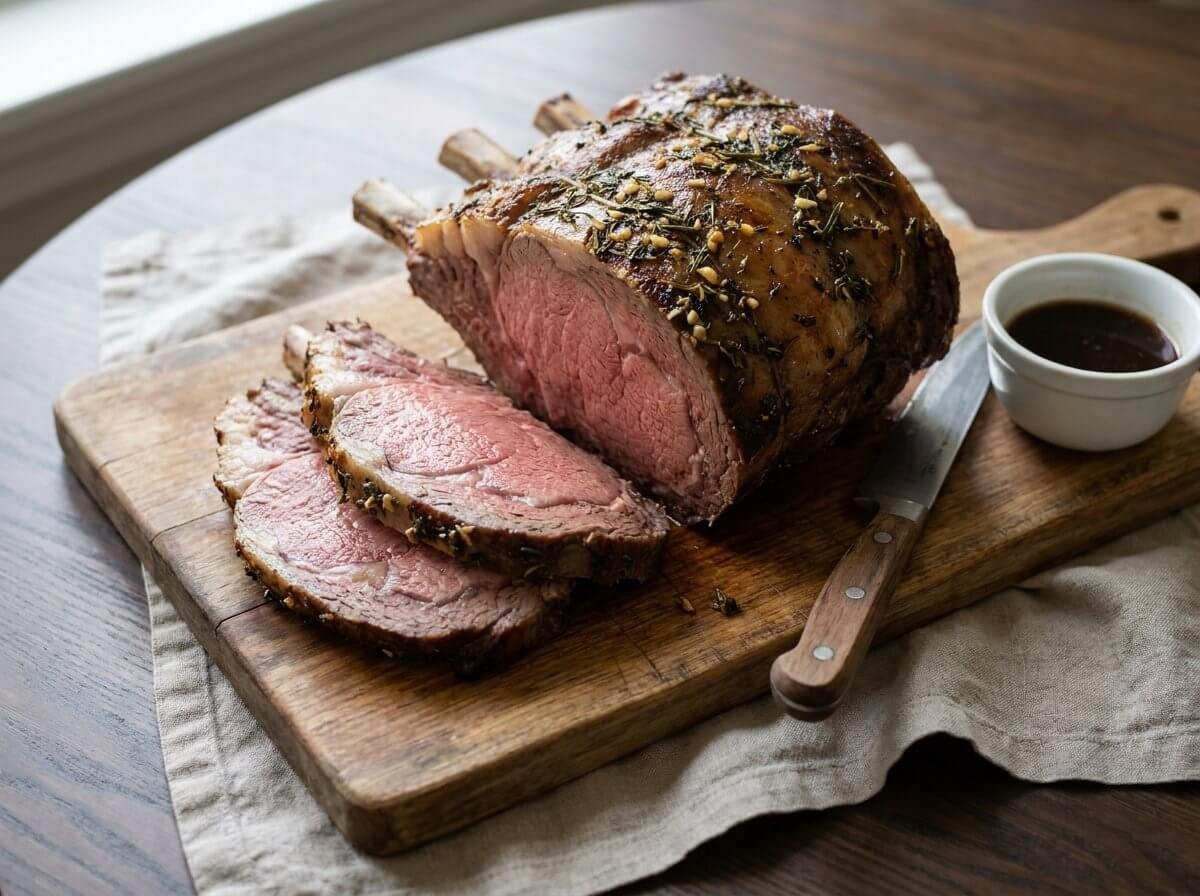
This prime rib roast recipe uses a bone-in roast, a stick of garlic herb butter and two oven temperatures. The roast goes into a hot oven for 20 minutes to brown the outside, then the heat drops and it cooks slowly until a thermometer tells you to take it out.
There’s no searing in a skillet and no flipping. The bones sit on the bottom of the pan and hold the meat up, so you don’t need a rack. Most of the time is hands-off, which leaves the stovetop free for the sides. The full recipe and the doneness chart are in the card below.
Easy Prime Rib Roast Recipe in the Oven
Equipment
- Roasting pan
- Instant-read or leave-in meat thermometer
- Small bowl
- Aluminum foil
- Cutting board
- Carving knife
Ingredients
Roast
- 1 bone-in prime rib roast 3 ribs, 6 to 7 pounds
- 1 tablespoon Diamond Crystal kosher salt or 2 teaspoons Morton kosher salt
- 1 teaspoon black pepper
Garlic herb butter
- ½ cup unsalted butter 1 stick, softened
- 6 cloves garlic minced
- 1 tablespoon fresh rosemary finely chopped
- 1 tablespoon fresh thyme finely chopped
- 1 teaspoon black pepper
Instructions
- Take the roast out of the refrigerator 1 hour before cooking. Pat it dry with paper towels and season it all over with the salt and 1 teaspoon pepper.
- Heat the oven to 450°F (230°C) with a rack in the lower third.
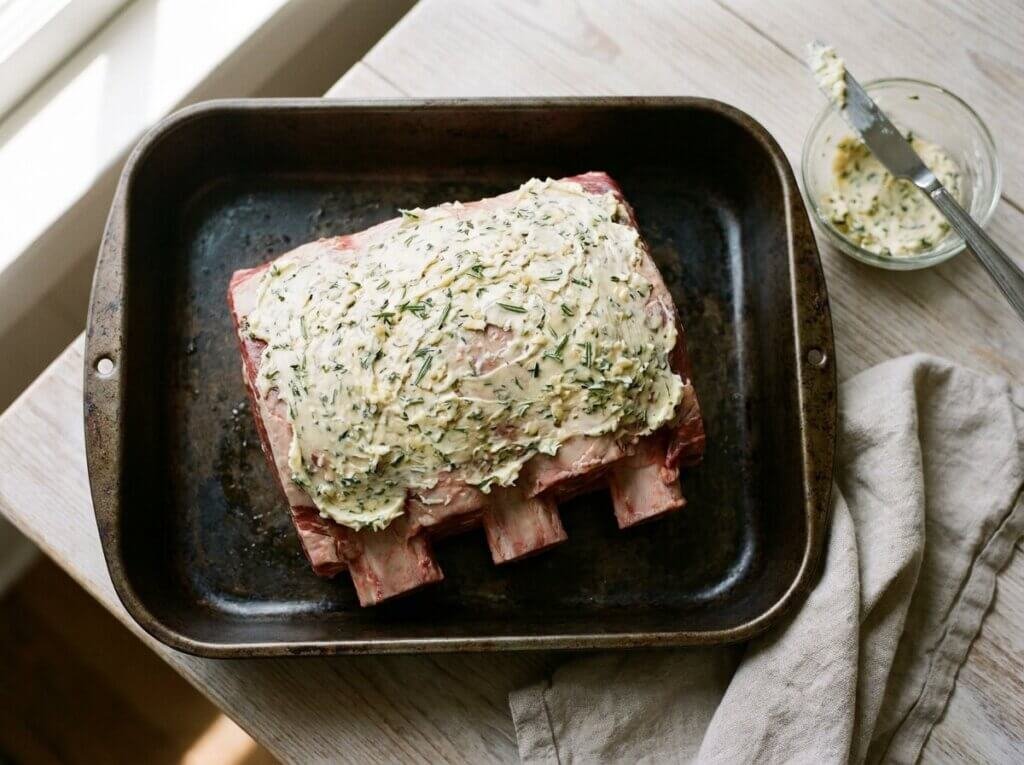
- Mix the butter, garlic, rosemary, thyme and the remaining 1 teaspoon pepper in a small bowl. Spread it over the top and sides of the roast.
- Set the roast bone side down and fat side up in a roasting pan. The bones work as a rack.
- Roast for 20 minutes. Reduce the oven to 325°F (165°C) without opening the door and keep roasting until a thermometer in the center of the thickest part, not touching bone, reads your pull temperature from the chart in the notes, about 1 1/4 to 1 3/4 hours more. Start checking after 1 hour. The USDA safe minimum for beef roasts is 145°F (63°C) after at least 3 minutes of rest.
- Move the roast to a cutting board, tent loosely with foil and rest for 30 minutes. The temperature rises 5–10°F (3–6°C) while it rests.
- Cut along the bones to remove them, then slice the roast across the grain about 1/2 inch thick. Spoon the pan juices over the slices.
Notes
- Rare: 115–120°F (46–49°C), about 125°F (52°C).
- Medium-rare: 120–125°F (49–52°C), 130–135°F (54–57°C).
- Medium, USDA safe minimum: 135–140°F (57–60°C), 145°F (63°C).
Why This Prime Rib Roast Recipe Works
Starting hot and finishing low gives you both things you want from prime rib. The first 20 minutes render some of the fat cap and set a brown, garlicky crust. The lower oven after that cooks the inside slowly, so the pink runs almost edge to edge instead of turning gray in a thick band under the crust.
The butter does more than add flavor. It holds the garlic and herbs on the meat while the fat cap melts, and it bastes the top of the roast as it goes. Whatever drips into the pan turns into a buttery jus to spoon over the slices.
Buying a Prime Rib Roast
Ask for a standing rib roast or bone-in rib roast. “Prime rib” is the name of the dish; the roast in the case is usually labeled USDA Choice, which works well here. USDA Prime has more marbling and costs a lot more.
A 3-rib roast feeds 6. Ask for ribs from the loin end (sometimes called the first cut or small end). It’s leaner and more even in shape than the chuck end, so it cooks more evenly.
Ask the butcher to cut the meat off the bones and tie it back on with string. You still get the bones as a rack in the oven, and carving takes a minute: snip the string, lift off the bones and slice.
How to Tell When Prime Rib Is Done
Go by the thermometer, not the clock. Two roasts of the same weight can be shaped differently and finish 20 minutes apart. A leave-in probe thermometer with a cable lets you watch the temperature without opening the oven.
Take the roast out before it reaches the doneness you want. It keeps cooking while it rests, and the chart in the recipe card already accounts for that rise. Push the probe into the center of the thickest part, away from the bone, because touching bone throws off the reading.
Resting also lets the juices settle, so less of them runs onto the cutting board. Tent the roast loosely with foil; wrapping it tightly steams the crust soft.
Timing Prime Rib for Christmas Dinner
Count back from the time you want to eat. Allow an hour on the counter, the roasting time, and the rest, then add 30 minutes in case the roast runs slow. If it finishes early, keep it tented; a big roast stays warm for a while.
The resting time is when the oven is free. Turn it up and use it for rolls or to finish a casserole, then carve while they bake.
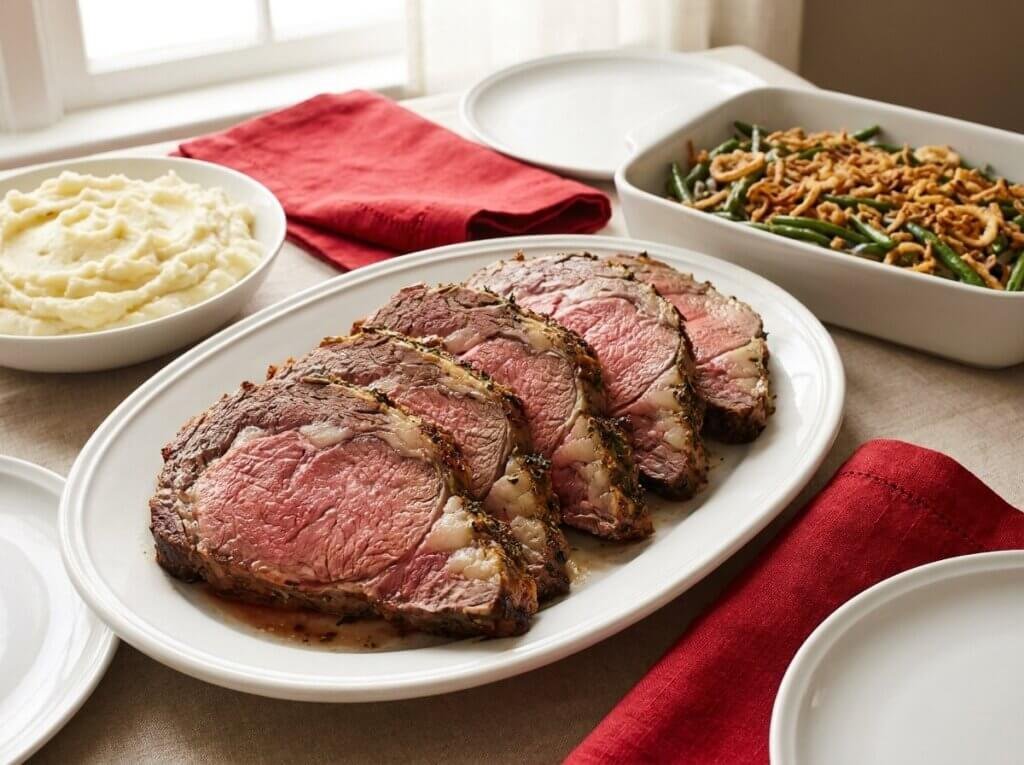
What to Serve with Prime Rib
Mashed potatoes and gravy made from the pan juices are the classic pairing. Our creamy garlic mashed potatoes can be made 2 days ahead, which helps when the oven is full. Add a green vegetable like our green bean casserole from scratch, and if you’re feeding kids, our easy crockpot mac and cheese recipe cooks on the counter without taking up any oven space.
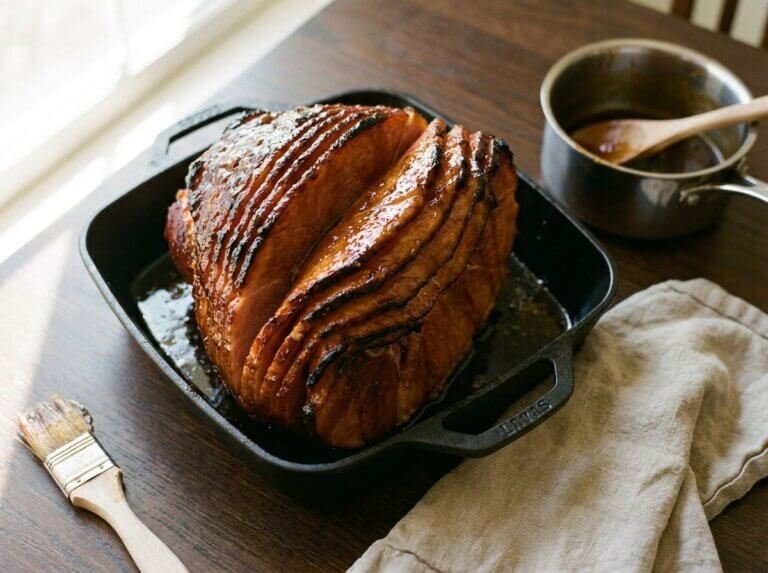
If ham is on the menu too, glaze it with our brown sugar ham glaze while the prime rib rests out of the oven.
Horseradish sauce is the usual condiment. Stir prepared horseradish into sour cream to taste.
For a lighter plate, cut thinner slices, trim the outer fat after carving, and fill half the plate with vegetables.
Storing and Using Leftover Prime Rib
Wrap leftovers tightly and refrigerate them for up to 4 days, or freeze them for up to 3 months. Slice the meat off the bone before storing; it takes less room and thaws faster.
USDA advises reheating leftovers to 165°F (74°C), which turns prime rib medium-well. That’s why leftover slices work best in dishes where doneness matters less: sliced thin in sandwiches with horseradish sauce, chopped into hash with potatoes, or stirred into soup.
Prime Rib FAQ
Is prime rib the same as a standing rib roast? Yes. A standing rib roast is the bone-in cut, and prime rib is what most people call it once it’s cooked. The name doesn’t mean it has to be USDA Prime grade.
Do I need a roasting rack? Not for a bone-in roast. The bones hold the meat off the bottom of the pan. A boneless roast needs a rack, or a bed of thick-sliced onions, so it doesn’t sit in the drippings.
Why is there a gray band under the crust? The oven ran too hot for too long. Keep the high-heat start to 20 minutes and let the low oven do the rest.
Can I cook a prime rib from frozen? No. Thaw it in the refrigerator first, or the outside will overcook before the center is ready.